LA Phil Presents: Weimar Republic: Germany 1918-1933
This article was originally published in Flaunt Magazine
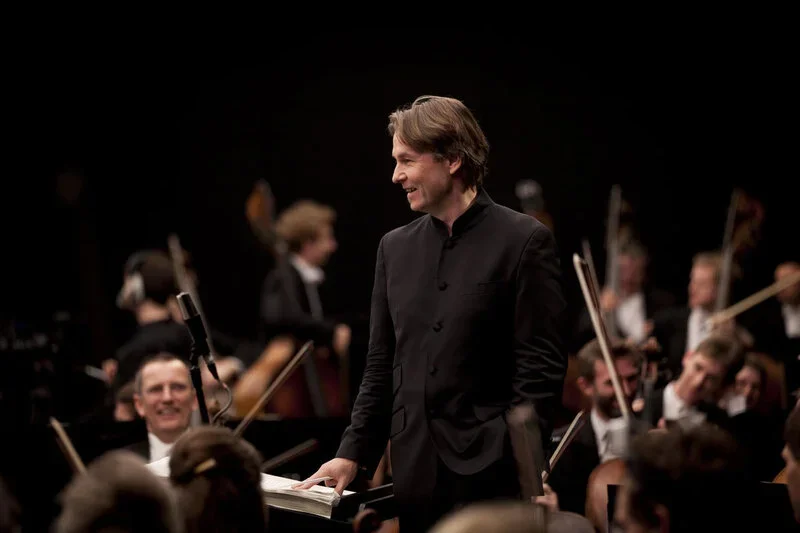
Esa-Pekka Salonen, Conductor. Photo Credit: Benjamin Ealovega
Last night, conductor Esa-Pekka Salonen joined the Los Angeles Philharmonic and Los Angeles Master Chorale to present the amalgamation of dramatic musical and visual performances that is Weimar Nightfall. This program that is a part of the grander set of performances entitled “The Weimar Republic: Germany 1918-1933,” which explores the lasting cultural contributions by German artists from the Weimar Republic. These various performances serve to highlight the transitions that the Weimar Republic underwent throughout these tremulous years, from its artistic heights in the Roaring 20s, to its lows during the Great Depression and the Rise of Nazism. Weimar Nightfall includes music that spans the length of this period, whilst focusing on the ill-omened future.
The program surrounded three works, one by German composer Paul Hindemith, and the other two by German Jewish composer Kurt Weill. It begins with the 1919 composition Murderer, Hope of Women, Hindemith’s operatic adaptation of the play by Austrian playwright, Oskar Kokoschka. Murderer is a heavy and dramatic work that acts as an omen of the troubling future ahead of them. It centers around a conflict between Man, performed by baritone Christopher Purves, and Woman, performed by soprano Madeleine Bradbury Rance. Hindemith’s disorienting and theatrical composition accentuates this struggle as one of evil against good, a struggle that sees evil dominate in the end. We see the narrative of evil descending over Weimar, not fully encompassing it, but putting it in a perpetual state of nightfall.
The second work is by German Jewish composer Kurt Weill done in collaboration with German playwright and poet Bertolt Brecht. Das Berliner Requiem, composed in 1928, is a piece that focuses mainly on its haunting harmonies sung by a choir of tenors and baritones. With the addition of a projected series of short silent clips of Berlin in the 20s. The clips, lyrics, and harmonies all work in tandem to paint a somber picture of a Berlin that is now on the other side of this nightfall. Whether it’s through the story of a girl’s suicide, or the imagery of the rise of Nazism, we are constantly reminded of the “cold, darkness, and decay” that has enveloped the consciousness of the nation.
The Seven Deadly Sins (1933) is another collaboration between Weill and Brecht, this time set in America. This ballet chanté (sung ballet) portrays Anna—a girl split into two characters—who ends up giving body her body and her agency to the world in hopes of supporting her family and achieving the American Dream. Soprano Nora Fischer portrays one side of Anna, the side that sings and guides the almost helpless dancer Anna, portrayed by actor Gabriella Schmidt. Weill’s composition is humorous and pensive all at once, and presenting a critique of industrial capitalism and utilizing the seven deadly sins as specific struggles that inform Anna’s life.
From stunning orchestral compositions and choral harmonies, to poignant visual and lyrical storytelling, Weimar Nightfall depicts not just a particular experience, but rather encompasses the underbelly of humanity that most people are too afraid to face. Through their work, Hindemith, Weill, Kokoschka, and Brecht have pointed a mirror towards the faults and anxieties that are laden within all societies, and in doing so, have allowed us to begin to learn from them.